Author: Carlos Silva min read 2026-07-23
Contributors: Zach Paruch and Christine Skopec
The global valve bag filling machine market crossed 87.6 billion RMB in 2025and is projected to surpass 96.2 billion by 2026. Yet many plant managers stillchoose packers the same way they did a decade ago—by price tag and brandfamiliarity. This guide walks through what actually determines whether yourbagging line runs clean, fast, and accurate for the next ten years.
If you're responsible for specifying a valve bag filling system, you alreadyknow the stakes. The wrong choice means underfilled bags, dust clouds on yourshop floor, changeovers that eat up half a shift, and a machine that sits idlewaiting for proprietary spare parts shipped from halfway across the world.
After 22 years of designing and manufacturing packaging equipment for over3,500 industrial clients, we've seen every selection mistake in the book. Thisguide distills what we've learned into a practical framework—covering the fourmain filling technologies, the material characteristics that should drive yourdecision, automation trade-offs, sealing options, and the total cost ofownership calculations that vendors rarely volunteer.
A valve bag is a multi-wall paper or plastic bag with an internal sleeve (the"valve") built into one corner. The filling machine's spout inserts into thissleeve, product flows in, and when the bag is removed, the valve flap closespassively—held shut by the weight of the product itself. No sewing. No heatsealing. No tie-off.
This simplicity is why valve bags dominate dry bulk packaging for cement,flour, chemicals, minerals, and agricultural products. The filling system,however, is anything but simple. It must accurately weigh the product, move itinto the bag at the right speed without dusting, and stop at the rightmoment—all while handling materials that range from free-flowing plastic pelletsto sticky, fluidized titanium dioxide.
Every valve bag filler has three core subsystems:
● Weighing system: Electronic load cells (sometimes with pneumatic cushioningfor shock absorption) that measure fill weight in real time. Modern systems usedynamic compensation algorithms that adjust for material flow rate changesduring the fill cycle.
● Product feeding mechanism: This is where technologies diverge—gravity, air(pneumatic), auger (screw), or impeller. The right choice depends entirely onyour material's physical properties.
● Bag handling: From manual bag placement on a single spout to roboticplacers on rotary multi-spout systems, this determines your throughput ceilingand labor requirement.
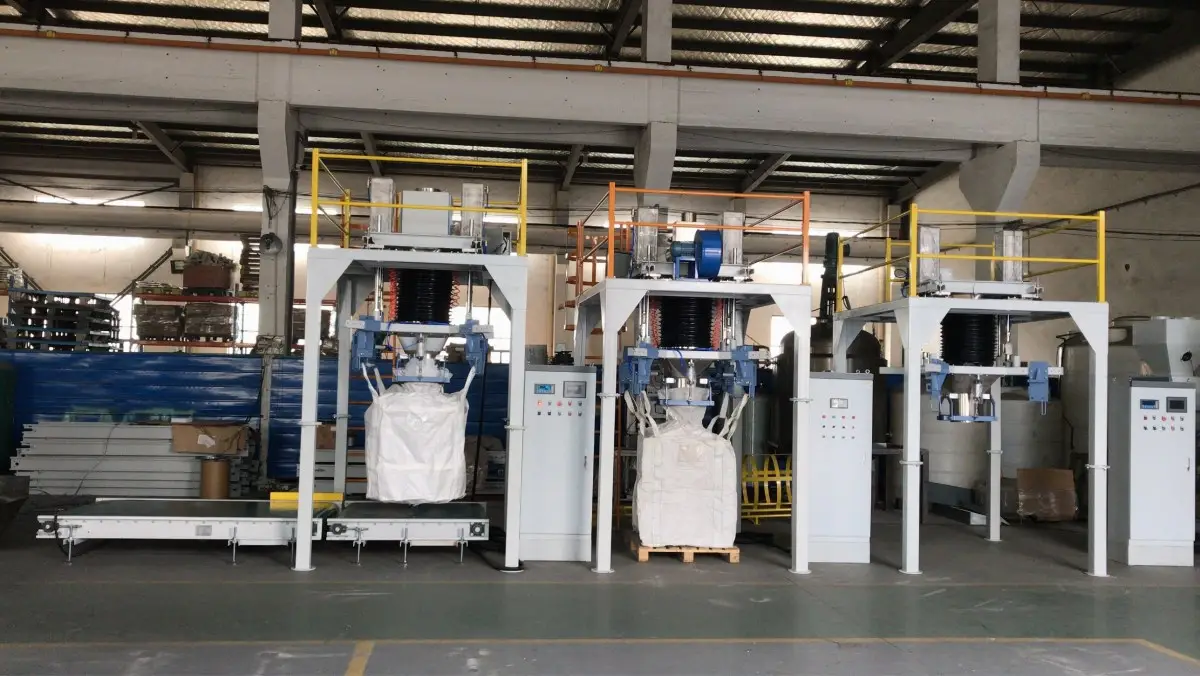
This is the single most important decision in the selection process. Thewrong feeding mechanism means chronic underfilling, dusting, jammed spouts, andbags that look half-empty on the pallet. Here's how the four main technologiescompare:
| Technology | HowIt Works | BestFor | Limitations | TypicalSpeed |
| Gravity | Productfalls through the spout by gravity alone. Simplest mechanism with no movingparts in the product path. | Free-flowinggranules: plastic pellets, grains, seeds, coarse salts | Cannothandle powders—material bridges and blocks the spout | 5–8bags/min (single spout) |
| Air(Pneumatic) | Compressedair fluidizes the product and pushes it through the fill spout. Ideal formaterials that flow better when aerated. | Fluidizablepowders: cement, fly ash, lime, gypsum | Requiresclean, dry compressed air (adds energy cost). Dusty if bag sealing ispoor. | 6–12bags/min (single spout) |
| Auger(Screw) | Arotating screw positively conveys material into the bag. Speed and pitch arematched to material density. | Non-free-flowingpowders: flour, starch, talc, titanium dioxide, fine chemicals | Screwwear on abrasive materials. Slower than air packers for high-volumepowders. | 4–8bags/min (single spout) |
| Impeller | Arotating impeller "slings" dense, fine-mesh material through the spout usingcentrifugal force. | Densefine powders: carbon black, mineral powders, metal powders | Notsuitable for granular or fibrous materials. Impeller wear requires regularreplacement. | 8–14bags/min (single spout) |
Practical tip from the field: If your material is borderline between twotechnologies, request a filling test on your actual product. Any reputablemanufacturer should be able to run a 50 kg sample through a test rig and providea video of the result. If they can't, that's a red flag about their engineeringdepth.
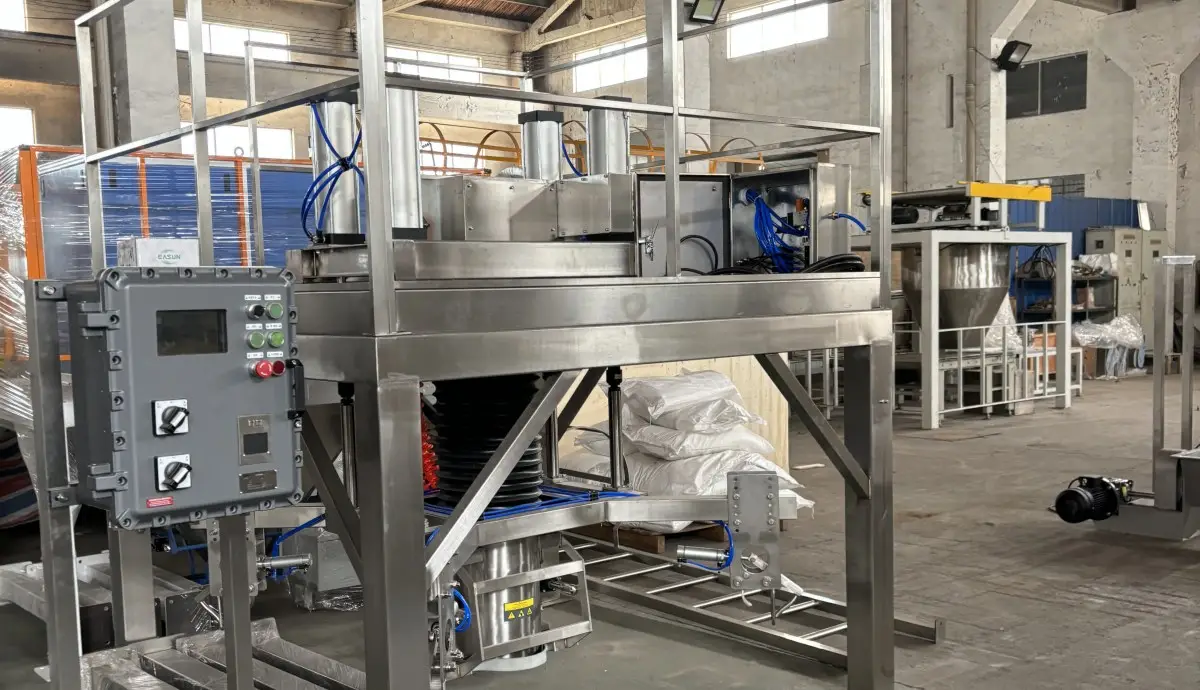
Filling technology choice ultimately comes down to how your material behaves.Here are the properties that matter most, and how they map to technologyselection:
Bulk Density
Materials above 0.8 g/cm³ (cement, minerals, metal powders) generally workwell with air or impeller packers. Materials below 0.5 g/cm³ (flour, starch,some chemical additives) often need auger feed to avoid over-aeration and bagbulging. Low-density, fluffy materials may require a two-stage fill: fast bulkfill followed by a slow top-up to reach target weight without overflowing.
Flowability
Test your material's flow function using a Carr Index or Jenike shear celltest. Materials with a Carr Index above 25% (poor flow) will almost certainlyneed auger or impeller feeding. Free-flowing materials (Carr Index below 15%)can use gravity or air. If you don't have this data, a simple angle of reposetest gives a rough indication: angles above 45° indicate poor flow; below 35°indicates good flow.
Particle Size and Distribution
Fine powders (below 100 microns) tend to fluidize and dust. They needenclosed feeding systems with dust extraction. Very fine, light powders (below10 microns, like carbon black or fumed silica) may require vacuum-assistedfilling to pull material into the bag rather than push it.
Abrasiveness and Corrosiveness
Abrasive materials (silica sand, mineral powders, metal oxides) will wearthrough auger flights and impeller blades faster than the manufacturer'sstandard wear-life estimates. Specify hardened tool steel or tungsten carbidewear components. For corrosive materials (chlorides, acidic compounds), request316L stainless steel contact parts rather than the standard 304 grade.
Moisture Sensitivity and Hygroscopy
If your product absorbs moisture from compressed air, a pneumatic packer mayintroduce enough water vapor to cause caking. Specify a refrigerated air dryeron the compressed air supply, or choose an auger system that doesn't introduceair into the product stream.
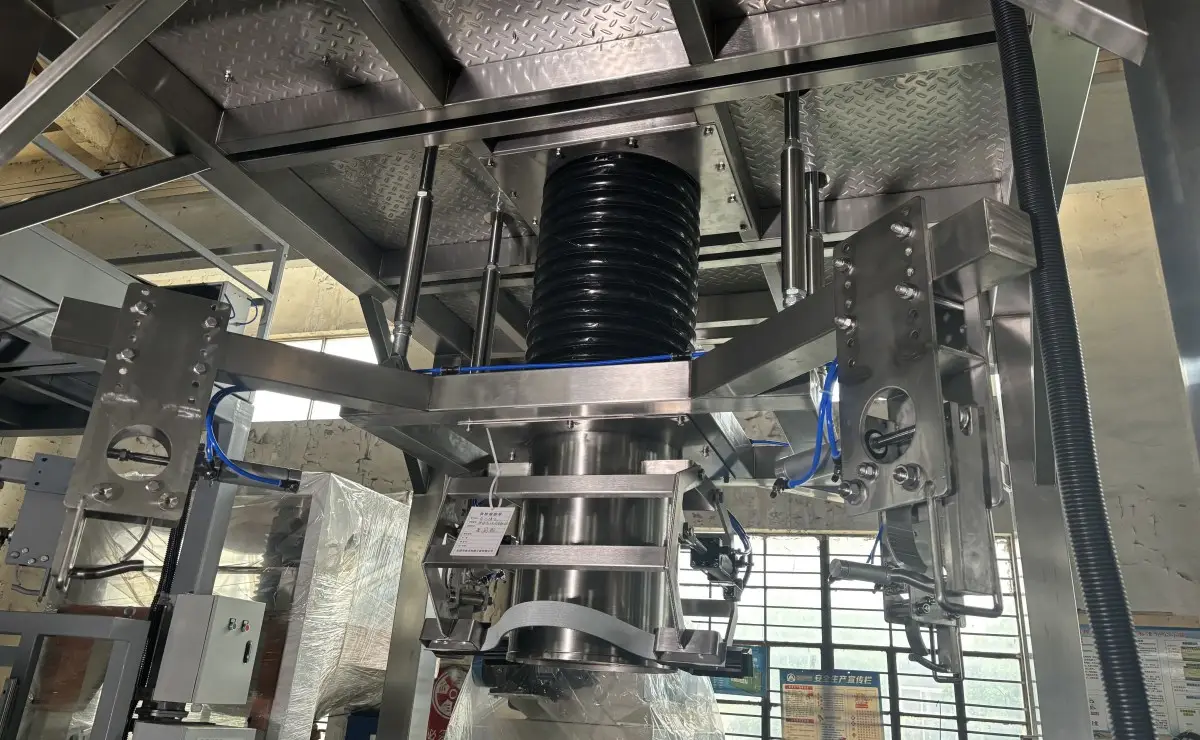
Vendors quote accuracy specs like ±0.2%, but the number means nothing withoutcontext. Here's what to ask:
● Is the accuracy stated as a percentage of target weight or full-scalerange? A ±0.2% of full-scale on a 50 kg system means ±100 grams—quite differentfrom ±0.2% of a 25 kg target (±50 grams).
● Was the test conducted under steady-state conditions or during a productionrun? Real-world accuracy is typically 2–3 times worse than lab conditions due tovibration, material flow variations, and operator timing.
● What sample size was used? Ask for test data on at least 50 consecutivebags. A 10-bag sample is statistically meaningless.
For most industrial applications, ±0.3% to ±0.5% of target weight is therealistic sweet spot. Tighter tolerances are achievable but require moreexpensive weighing systems and slower fill speeds. For regulated industries(pharmaceuticals, food additives), you may need legal-for-trade certifiedweighing with type approval.
Regulatory note: If your filled bags are sold by weight, your filling systemmay need to meet OIML R76 or NIST Handbook 44 requirements for automaticweighing instruments. Confirm this with your local weights and measuresauthority before purchasing.
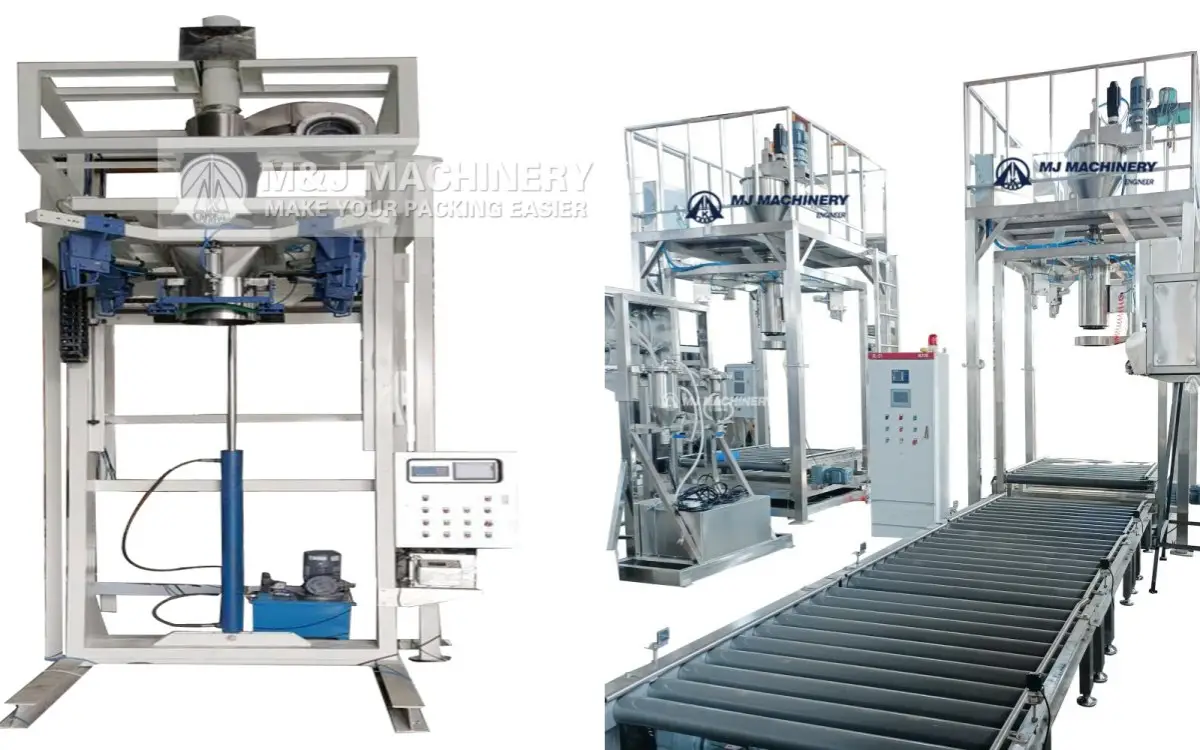
Manual Single-Spout Packers
An operator manually places each bag on the spout, triggers the fill, andremoves the filled bag. Throughput: 3–6 bags per minute. This is the entry-leveloption—appropriate for small batches, pilot production, or facilities with lowlabor costs. The hidden cost is operator fatigue and inconsistency: an operatorwho places bags slightly differently each time will see accuracy drift,especially with dusty materials.
Semi-Automatic with Bag Inflation
The operator still places bags manually, but the machine inflates the bagbefore filling (improving fill consistency) and automatically stops at targetweight. Some models include a bag hanging system that reduces operator strain.Throughput: 6–10 bags per minute. This is the most common configuration formid-volume production and represents the best balance of cost, flexibility, andthroughput for most plants.
Fully Automatic with Robotic Bag Placement
A robotic arm or vacuum-based magazine feeder places empty bags on thespout(s) automatically. Filled bags are discharged onto a conveyor for transferto palletizing. Throughput: 12–16+ bags per minute on single-spout systems;rotary multi-spout systems can exceed 20 bags per minute. The investment issignificant ($80,000+), but it eliminates the most labor-intensive andergonomically challenging step in the process.
Rotary Multi-Spout Systems
Multiple filling spouts rotate on a carousel, with bags filledsimultaneously. This is the highest-throughput option for large-scaleoperations. HAVER & Boecker's ROTO-PACKER series and similar systems canfill 2,000+ bags per hour for cement and minerals. These systems are complex,require significant floor space, and demand trained maintenance personnel—butfor high-volume producers, the cost per bag is unbeatable.
The valve bag's internal flap creates a passive seal that works well forcoarse, free-flowing materials. But for fine powders—anything below 200microns—product migrates through the valve opening during handling andtransport. You end up with dusty pallets, product loss, and customercomplaints.
Options for Enhanced Sealing
● Ultrasonic sealing: High-frequency sound waves fuse the internal valve ofplastic-lined bags, creating a hermetic seal. No external heat, so there's norisk of scorching the bag material. The sound waves also drive product away fromthe seal area before bonding, which means you get a clean seal even if somepowder is present. This is the gold standard for fine powder packaging.
● Heat sealing: Simpler and cheaper than ultrasonic, but requires precisetemperature control. Works for PE-coated valve bags. Risk of melting iftemperature drifts.
● Pinch-style top closure: Some operations add a pinch sealer that folds andglues the top of the bag after filling. This provides a clean, stackable flattop but adds an extra mechanical step.
● No additional sealing (passive valve only): Acceptable for granularmaterials, cement, and products where minor dusting during transport istolerable.
Cost vs. value: Ultrasonic sealing adds $15,000–$30,000 to the system price.If your product is a fine powder sold to customers who expect clean, dust-freepackaging, this investment pays for itself within months through reduced productloss and fewer rejected shipments.
A valve bag filler doesn't operate in isolation. It sits between upstreammaterial handling (silos, conveyors, dosing bins) and downstream operations(conveying, palletizing, stretch wrapping). The most common integration mistakeswe see:
● Insufficient headroom above the filler for material feed. Gravity-fedsystems need consistent material supply. If your silo discharge is erratic, thefiller starves and underfills. Install a surge bin with a level sensor betweenthe silo and the filler.
● No dust collection at the fill station. Even with good valve bags, somedust escapes during bag removal. A localized dust hood above the spout area,connected to a central dust collector, is non-negotiable for fine powders.
● Mismatched palletizing throughput. If your filler produces 12 bags perminute but your palletizer can only handle 8, bags pile up on the conveyor. Sizeyour palletizer for 120% of the filler's peak throughput.
● No buffer between filler and palletizer. A short accumulation conveyor (3–5meters) absorbs the gap between bag discharge and pallet placement, preventingstoppages when the palletizer cycles.
Cement and Building Materials
High throughput, dusty product, heavy bags (25–50 kg). Air packers dominatethis segment. Prioritize dust-tight bag seating, robust compressed air drying,and a filler rated for continuous operation (16+ hours per day). Cement dust ishighly abrasive—specify wear-resistant spout liners and plan for 6-monthreplacement intervals.
Food and Pharmaceutical Powders
Hygiene is paramount. Specify 304 or 316L stainless steel throughout theproduct contact area, FDA-compliant elastomers, CIP (clean-in-place) capability,and tool-free disassembly for sanitation. Auger fillers are standard here.Food-grade applications may require metal detection on the dischargeconveyor.
Chemicals and Specialty Powders
The range here is enormous—from free-flowing plastic pellets to sticky,hygroscopic additives. Map each product in your portfolio to its ideal fillingtechnology. If you run multiple products through the same line, invest inquick-change spout assemblies and recipe-driven parameter storage. A changeoverthat takes more than 15 minutes is costing you production time.
New Energy Materials (Lithium Battery Components)
This is the fastest-growing segment for valve bag fillers. Cathode powders(LFP, NMC, NCA) are extremely fine, moisture-sensitive, and valuable—often$30–$80 per kilogram. These applications demand: enclosed auger filling withnitrogen purge capability, ultrasonic sealing, glove-box-style enclosed baghandling, and weighing accuracy of ±0.1%. Moisture content in the filled bagmust be controlled below 200 ppm, which means the entire filling environmentneeds humidity control.
The purchase price is 40–60% of your total cost of ownership over a 10-yearequipment life. Here's what to budget for:
| CostCategory | TypicalAnnual Cost | Notes |
| Spareparts (wear items: spouts, augers, impellers, seals) | $2,000–$8,000 | Higherfor abrasive materials. Ask for wear part pricing before purchase. |
| Compressedair (for pneumatic packers) | $3,000–$12,000 | Dependson air consumption (typically 0.5–2 m³/min per spout) and local electricityrates. |
| Electricity | $1,500–$5,000 | Servo-drivenaugers are more efficient than older hydraulic systems. |
| Preventivemaintenance labor | $2,000–$6,000 | Weeklyinspection, monthly calibration, quarterly deep service. |
| Unplanneddowntime cost | $5,000–$25,000per event | Oneblocked spout on a 12-bag/minute line = $1,200/hour in lostproduction. |
| Operatorlabor | $30,000–$60,000/year | Peroperator per shift. Automatic bag placement eliminates 1 FTE. |
Key insight: A machine that costs $20,000 less to purchase but requires$5,000 more per year in spare parts and energy will cost you $30,000 more over a10-year life. Always calculate 10-year TCO before making a purchasedecision.
1. Choosing based on the cheapest quote. The purchase price differencebetween a budget packer and a quality system is typically $10,000–$20,000. Thedifference in 10-year operating cost is often $50,000–$100,000. Get quotes fromat least three manufacturers and compare TCO, not sticker price.
2. Not testing with your actual material. Material behavior variesdramatically between suppliers and batches. What fills perfectly on a testsample may bridge, dust, or cake in production. Always insist on a filling trialwith your real product before committing.
3. Over-specifying automation. A fully automatic robotic system looksimpressive in a proposal, but if your production volume is 200 bags per day, theROI may take 8+ years. Match automation level to your actual throughput needs,not your aspirational ones.
4. Ignoring spare parts availability. Ask the manufacturer: What's the leadtime on a replacement auger? Do they maintain a local parts warehouse? Can I geta wear kit shipped within 48 hours? If the answer is "4–6 weeks from our factoryin Europe," budget for a complete set of spare wear parts on day one.
5. Forgetting about commissioning and training. A valve bag filler needs 2–5days of on-site commissioning and operator training to run properly. Confirmthat the manufacturer includes this in the price and provides documentation inyour team's working language.
6. Neglecting dust collection sizing. An undersized dust collector means adusty plant, compliance issues, and potential explosions. Size your dustextraction for 3,000–5,000 m³/h per fill station for fine powders, and ensureyour collector has explosion venting if handling combustible dusts.
MJ Machinery Engineering Co.,Ltd. Founded in 2004 in Wuxi City, MJ has grown from one of the earliest packaging machine manufacturers in China to a leading force in the industry. With over 22 years of dedication and innovation, we are proud to provide high-quality, reliable, and efficient packaging solutions to clients worldwide.
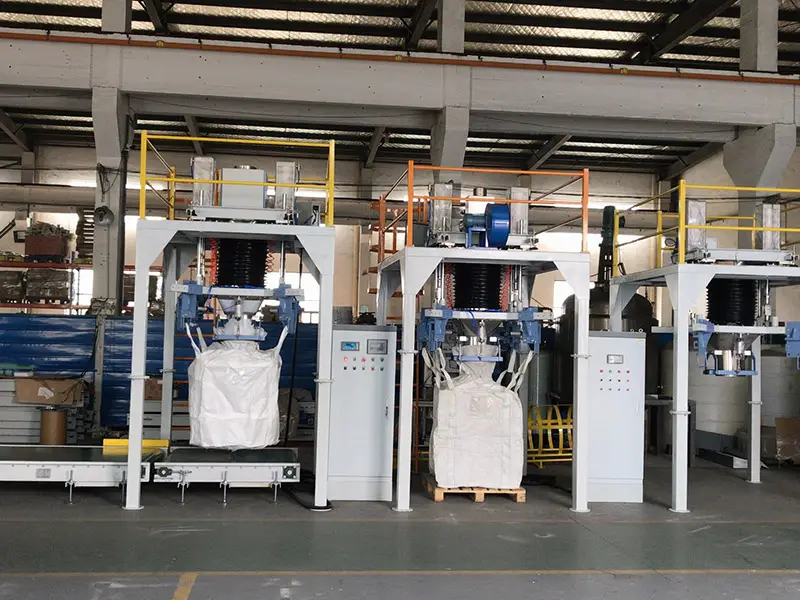
Discover how to select the best valve bag filling machine with MJ MACHINERY, a leading manufacturer in China of packaging machines.
 EN
EN EN
EN AR
AR NL
NL FR
FR DE
DE PL
PL PT
PT RU
RU ES
ES ID
ID